

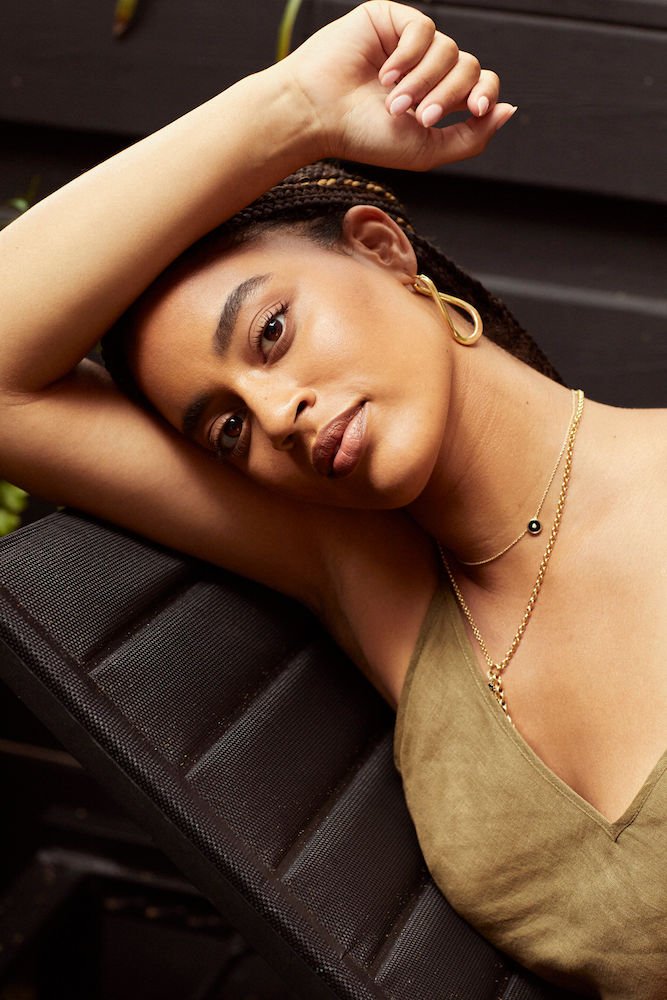
If you’ve ever stared at a bronzer compact and wondered, What exactly am I supposed to do with this?, you’re not alone. Bronzers are among the most confusing products in the beauty aisle—partly because they often get lumped together with contouring, and partly because shade-matching and formulas can feel overwhelming.
But Paris-based makeup artist Harold James, who’s earned a reputation as something of a bronzer whisperer, wants to set the record straight. “Bronzer is not contour,” he insists. “It’s about warmth, not shadow. Once you understand that, everything else falls into place.”
Here, Harold breaks down how to choose, apply, and wear bronzer so it looks seamless—never streaky or orange.
Step 1: Know the Purpose
The first rule of bronzer: it’s not sculpting. Contouring products tend to lean cool-toned to mimic natural shadows, chiseling out cheekbones or defining jawlines. Bronzer, on the other hand, is about adding sun-kissed heat to the high points of your face—the areas where light would naturally hit. Think of it as the warm sibling to highlighter: instead of glow, it delivers radiance and depth.
“Bronzers enhance the life in your skin,” Harold explains. “They make you look like you just spent a little time in the sun—even if you haven’t.”
Step 2: Find Your Shade
Choosing the right shade is the step that intimidates most people. Harold recommends starting with this guiding principle: for everyday wear, pick a bronzer just one or two shades darker than your foundation. That creates a subtle glow, like the warmth you’d get from a walk outdoors.
If you want a more dramatic, beach-day effect, you can go two to three shades deeper. But Harold cautions against taking cues from social media tutorials. “What works on camera doesn’t always work in real life,” he says. Influencers often use bronzers far darker than necessary to make them visible through the lens—but on bare eyes, those same shades can look harsh.
“Finding your perfect bronzer is personal,” Harold notes. “There’s no universal rule, so don’t be afraid to test and experiment.”
Step 3: Pick the Right Formula
Formulas matter just as much as shade. While creams are trendy, Harold suggests leaving them until you’re more confident, since they tend to be highly pigmented and less forgiving. For beginners, he recommends liquid or gel-cream bronzers. They’re easy to blend and more forgiving if you apply too much.
Powder bronzers are still a solid choice—especially for oily skin—but no matter what formula you choose, the golden rule remains the same: build gradually. “Start with the smallest amount and layer,” Harold advises. “When you do that, it’s nearly impossible to mess up.”
Step 4: Master the Application
So, where does bronzer actually go? Harold’s approach is refreshingly straightforward: follow the sun. “Apply bronzer where the light would naturally hit your face,” he explains. That means along the hairline, across the tops of the cheekbones, and sometimes even dusted lightly over the nose and chest for continuity.
He often applies the product with his fingers first. “When you warm it up in your hands, it blends more easily,” he says. Once the base is down, Harold likes to use a Beautyblender for seamless diffusion. For more precision or intensity, he switches to a dense brush.
The biggest mistake people make? Overloading the brush. “There’s a misconception that bronzer should be applied heavily,” Harold says. “It might feel satisfying at first, but once it dries down, it looks patchy. Less really is more.”
Step 5: Think About Order
Another common question is when to apply bronzer in relation to other products. Harold has two answers, depending on the finish you want:
- For softness: Apply bronzer before foundation, a technique known as underpainting. Once you add foundation on top, the bronzer peeks through subtly, creating a diffused, natural effect.
- For precision: Apply bronzer after foundation but before blush. This gives you more control and creates dimension that stands out well in photos.
Both approaches work—the choice depends on whether you’re going for everyday radiance or camera-ready definition.
Step 6: Embrace the Parisian Mindset
As a Paris-based artist, Harold can’t help but share how the French approach bronzer. “Here they call it terracotta, and it’s practically essential,” he says with a smile. “Women will wear just bronzer and lipstick, and it’s considered a full look.”
The Parisian rule, however, is that bronzer should never veer too orange. “It’s about subtle warmth, not an artificial tan,” Harold explains. The result is elegant and effortless, rather than obvious.
Step 7: Get Creative
While blush has a limited range of placement, bronzer offers endless possibilities. “The ultimate goal is to bring warmth,” Harold reiterates, “and that can be anywhere.” Beyond the usual cheekbones and hairline, he loves sweeping bronzer across the eyelids for instant depth. The effect is soft, monochromatic, and ties the whole look together.
The Takeaway
Bronzer doesn’t need to be intimidating. When you stop thinking of it as contour’s cousin and start treating it as warmth in a compact, it becomes an adaptable, versatile tool. Choose a shade close to your skin tone, blend with a light hand, and let the sun-inspired roadmap guide you.
As Harold puts it: “Bronzer is there to give life. It should look like you—only warmer, happier, and just back from holiday.”